Regional Variations in Behavioral Patterns During Peak Hours for App-Based Card Competitions
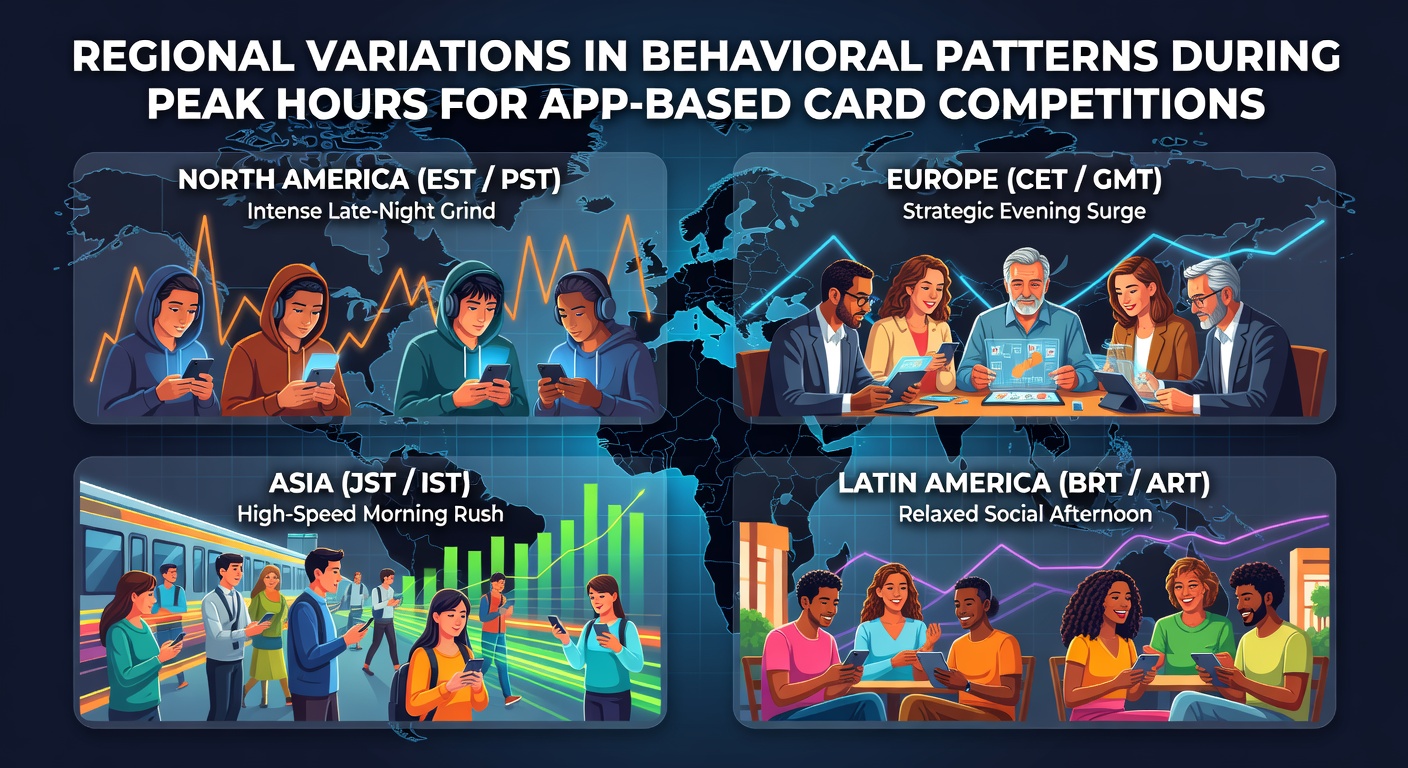
App-based card competitions draw millions of participants each evening when workdays wind down and leisure time opens up yet activity levels shift sharply depending on geography and local rhythms. Data from industry tracking platforms indicate that peak hours typically span 6 PM to 11 PM in most urban centers though the intensity and style of engagement vary widely between continents. Observers note that users in densely populated Asian markets tend to cluster in shorter, high-frequency sessions while those in North American regions often extend play into longer strategic marathons.
Peak Hour Dynamics Across Continents
Research from digital entertainment analysts shows East Asian participants log in earlier relative to local time zones because many metropolitan areas operate on compressed evening schedules after extended workdays. Sessions in these regions average 25 to 35 minutes with rapid turnover between matches and users frequently switch between multiple tables or tournaments in quick succession. In contrast European patterns reveal a later ramp-up that builds gradually after dinner hours with participants favoring sustained rounds that last 45 minutes or more according to aggregated app telemetry.
North American data collected through 2025 and into early 2026 highlight a split between weekday and weekend behaviors where weekday peaks concentrate between 8 PM and 10 PM while weekend activity stretches across broader windows. Those who've examined user logs point out that competition intensity measured by bet sizes and risk tolerance rises noticeably in the final hour of each peak period across all regions though the baseline starting points differ. What's interesting is how cultural factors such as communal dining traditions or family obligations create distinct entry points that shape the overall flow of participation.
Behavioral Patterns by Region
Studies conducted by academic teams at institutions in Australia and Canada reveal that players in Oceania demonstrate higher rates of collaborative chat usage during peak windows compared with North American counterparts who prioritize silent competitive modes. Figures from these analyses show Australian users engage in voice or text interactions in roughly 40 percent of sessions while Canadian numbers hover closer to 28 percent during the same timeframe. This variation ties directly to differing social norms around digital leisure that researchers continue to map through longitudinal surveys.
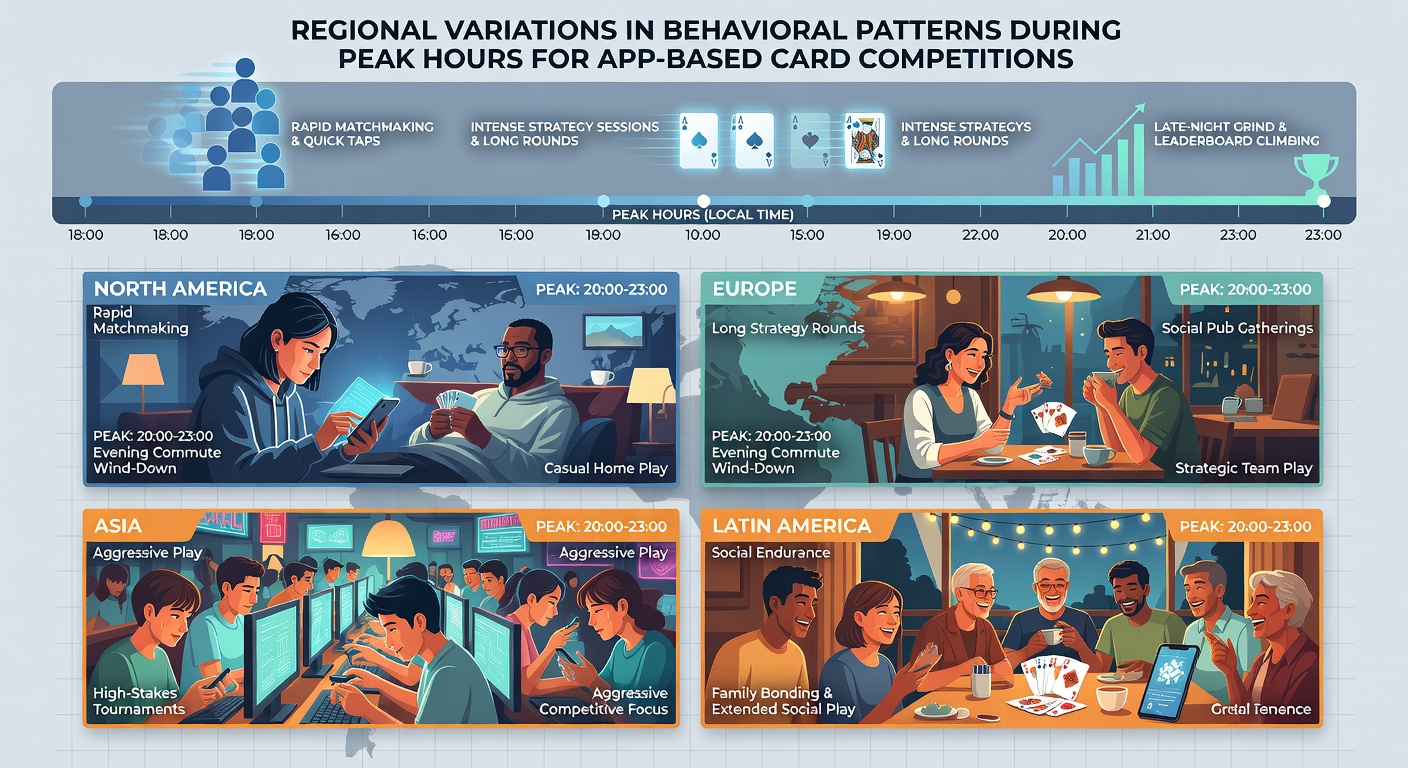
Meanwhile Southeast Asian markets exhibit pronounced spikes around 9 PM local time when mobile data costs drop and connectivity improves in many urban zones. App metrics indicate that users here complete more rounds per hour than their European peers yet spend less cumulative time per login. But here's the thing: these shorter bursts align with commuting patterns and shared device usage common in households where multiple family members access the same accounts sequentially.
European regulatory filings and industry reports compiled through bodies such as the European Gaming and Betting Association track how Mediterranean countries show extended session lengths that peak later than Nordic counterparts. Data indicates Spanish and Italian participants maintain higher average table counts per evening whereas Scandinavian users display steadier but lower-volume engagement spread across the entire peak window. These distinctions emerge clearly when analysts cross-reference time-stamped logs with demographic overlays.
Shifts Observed in May 2026
Updates rolled out across several major platforms in May 2026 introduced region-specific matchmaking algorithms that adjust difficulty curves based on historical peak-hour data from each market. Early telemetry from these changes suggests East Asian sessions became even more condensed while North American play incorporated additional break prompts that align with local wellness guidelines promoted by health agencies. Observers tracking adoption rates note that these tweaks produced measurable differences in retention without altering overall participation volumes.
Academic papers published by research groups at the University of Sydney further examine how seasonal factors such as public holidays influence May patterns in the Southern Hemisphere where cooler weather encourages indoor app use. Their findings align with parallel observations from North American university studies that link daylight saving transitions to slight delays in evening login surges. Together these datasets paint a picture of layered influences that extend beyond simple time-of-day effects.
Conclusion
Regional variations in behavioral patterns during peak hours for app-based card competitions reflect a complex interplay of work schedules, cultural practices, and technological infrastructure that continues to evolve. Evidence from multiple continents demonstrates consistent yet distinct rhythms that developers and analysts monitor closely to refine user experiences. As platforms adapt features in response to these documented differences the landscape of evening digital card play keeps shifting in measurable ways across global markets.