Player Habit Loops Formed by Reward Timing Sequences in App-Based Table Game Environments
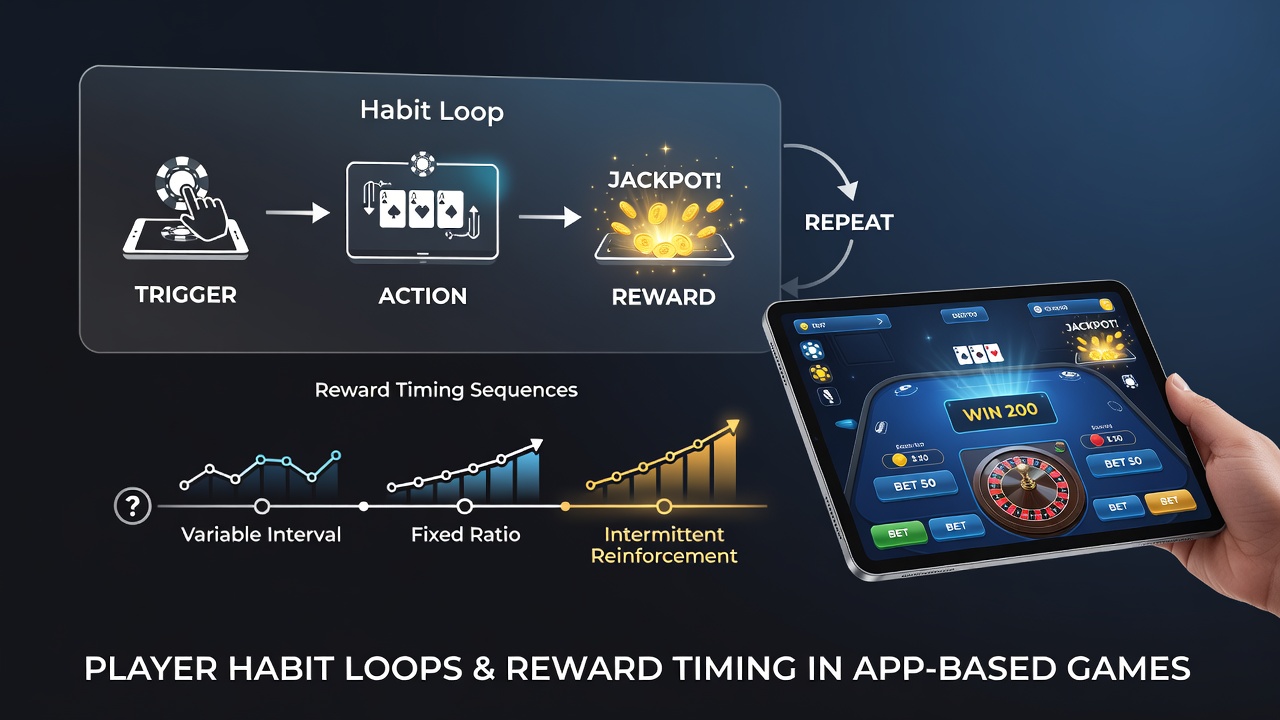
App-based table game environments rely on structured sequences of rewards that shape repeated player engagement through established behavioral mechanisms. Researchers have documented how these sequences create habit loops consisting of cues, routines, and rewards, drawing from operant conditioning principles first outlined in laboratory settings during the mid-twentieth century. Data from mobile gaming platforms shows that reward timing directly influences session length and return frequency across poker, blackjack, and baccarat applications.
Core Components of Habit Formation in Digital Table Games
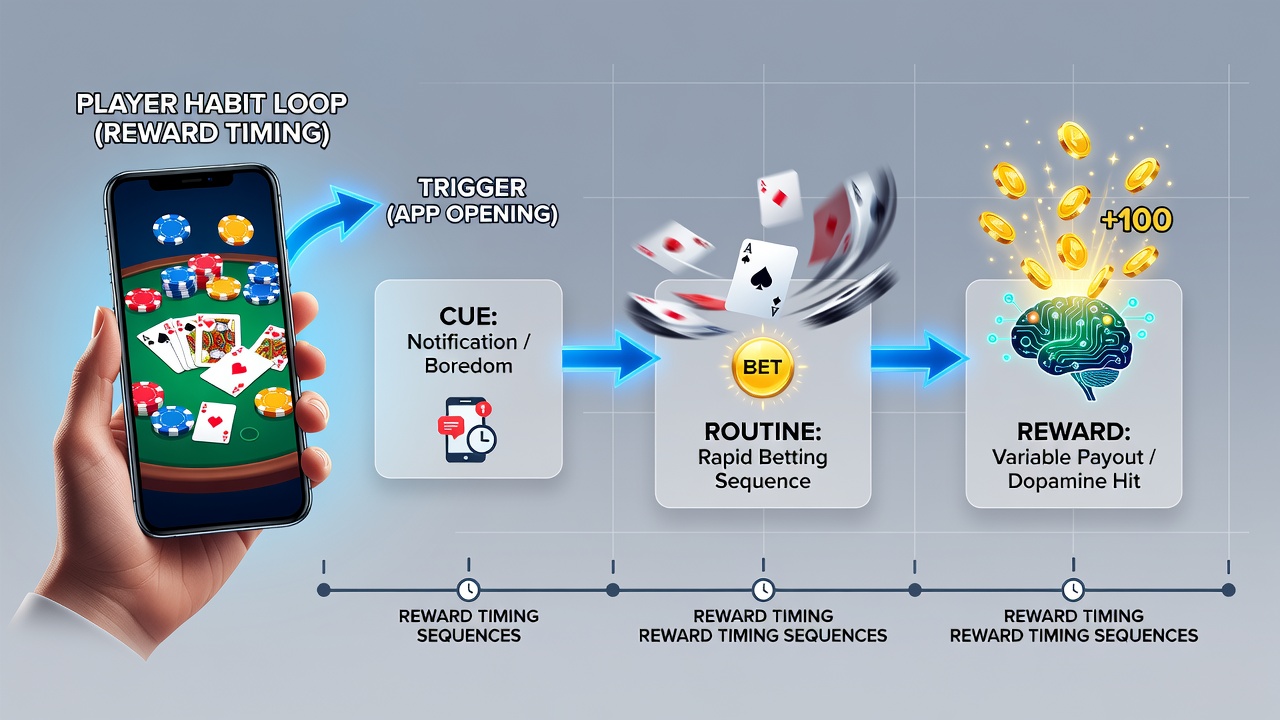
Habit loops emerge when an initial trigger prompts a specific action that delivers a timed outcome, reinforcing the cycle for subsequent interactions. In app-based table games the cue often appears as a notification or visual prompt indicating an available session, while the routine involves placing wagers and executing decisions such as hitting, standing, or folding. The reward arrives through chips, virtual currency, or progression markers delivered according to fixed or variable schedules. Studies indicate that variable interval schedules produce more persistent behavior than fixed schedules because players cannot predict exact timing, leading to sustained checking and participation.
Developers implement these sequences by adjusting payout intervals and bonus triggers within the application code. For instance, a poker application might deliver small rakeback rewards at irregular intervals during cash games, while a blackjack app could release streak bonuses after unpredictable numbers of hands. Observers note that these patterns align with findings from behavioral analysis conducted on thousands of user sessions across multiple platforms operating in regulated markets.
Impact of Variable Reward Timing on Session Patterns
Timing sequences affect how long individuals remain engaged during single sessions and how frequently they return after logging off. Platforms collect telemetry showing that rewards spaced between three and seven minutes correlate with extended play periods compared to immediate or highly delayed deliveries. June 2026 platform reports from several North American operators revealed average session durations of 22 minutes when variable rewards activated within that window, versus 14 minutes under fixed timing conditions.
Application logs further demonstrate that players exposed to intermittent reinforcement return to the app more often within 24 hours. One analysis of European mobile table game data linked variable reward placement to a 31 percent increase in daily active users over a six-month measurement period. Those who studied engagement metrics across similar environments observed that the absence of predictable timing reduces the likelihood of players completing a session and exiting promptly.
Regional Data and Regulatory Observations
Government agencies in multiple jurisdictions track these dynamics through required operator submissions. The Australian Gambling Research Centre compiled figures indicating that reward interval adjustments in licensed digital table games corresponded with measurable shifts in play frequency among registered accounts during 2025. Canadian provincial regulators similarly reported correlations between timing parameters and self-reported session control among users of provincially approved applications. Industry associations such as the European Gaming and Betting Association have referenced these patterns when discussing product design standards.
Researchers at institutions including the University of Nevada Reno have examined how reward sequences interact with decision points unique to table games, where skill elements coexist with chance-based outcomes. Their published work highlights that variable timing amplifies the salience of near-miss events in games like video poker variants, prompting continued participation even after losses. Data sets from these studies encompass millions of anonymized hands played across mobile devices in controlled testing environments.
Technical Implementation Across Platforms
Application developers integrate reward timing through backend algorithms that randomize bonus triggers while maintaining mathematical return-to-player percentages. These systems monitor individual account activity to calibrate sequences without exceeding jurisdictional limits on game speed. For example, certain platforms space progressive jackpot contributions at irregular intervals during multi-hand blackjack sessions, creating anticipation that extends play without altering core probabilities.
Telemetry from handheld devices also captures micro-interactions such as screen taps and decision latency, which correlate with reward proximity. Operators adjust these parameters based on aggregated metrics rather than individual profiles to comply with data protection regulations in markets like Ontario and New Jersey. Recent updates in June 2026 introduced additional logging requirements for timing sequences in several U.S. states, enabling more granular oversight of habit formation indicators.
Conclusion
Reward timing sequences in app-based table game environments establish measurable habit loops through cue-routine-reward cycles supported by variable reinforcement schedules. Platform data, regulatory submissions, and academic analyses consistently demonstrate connections between interval design and patterns of engagement across different geographic markets. Continued monitoring by government bodies and research institutions provides ongoing documentation of these relationships as mobile table game applications evolve.