How Encryption Standards Coordinate Secure Payout Flows Across Distributed Poker Networks and Mobile Casino Platforms
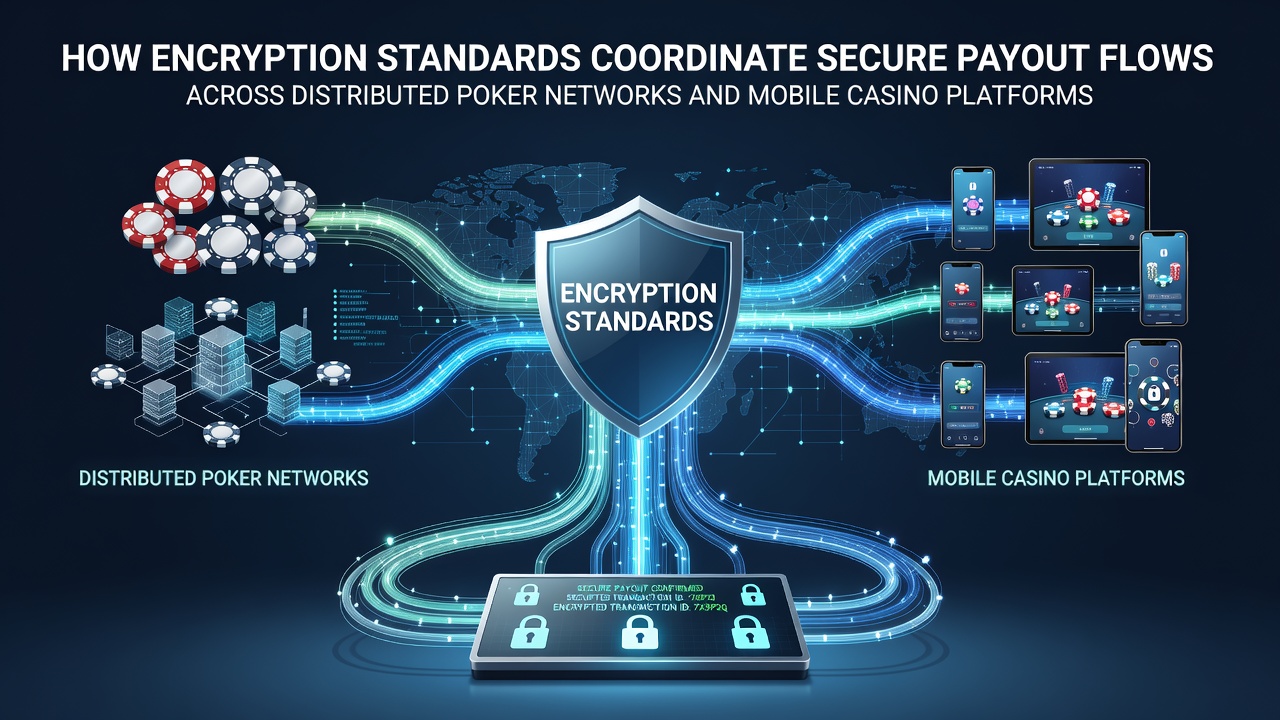
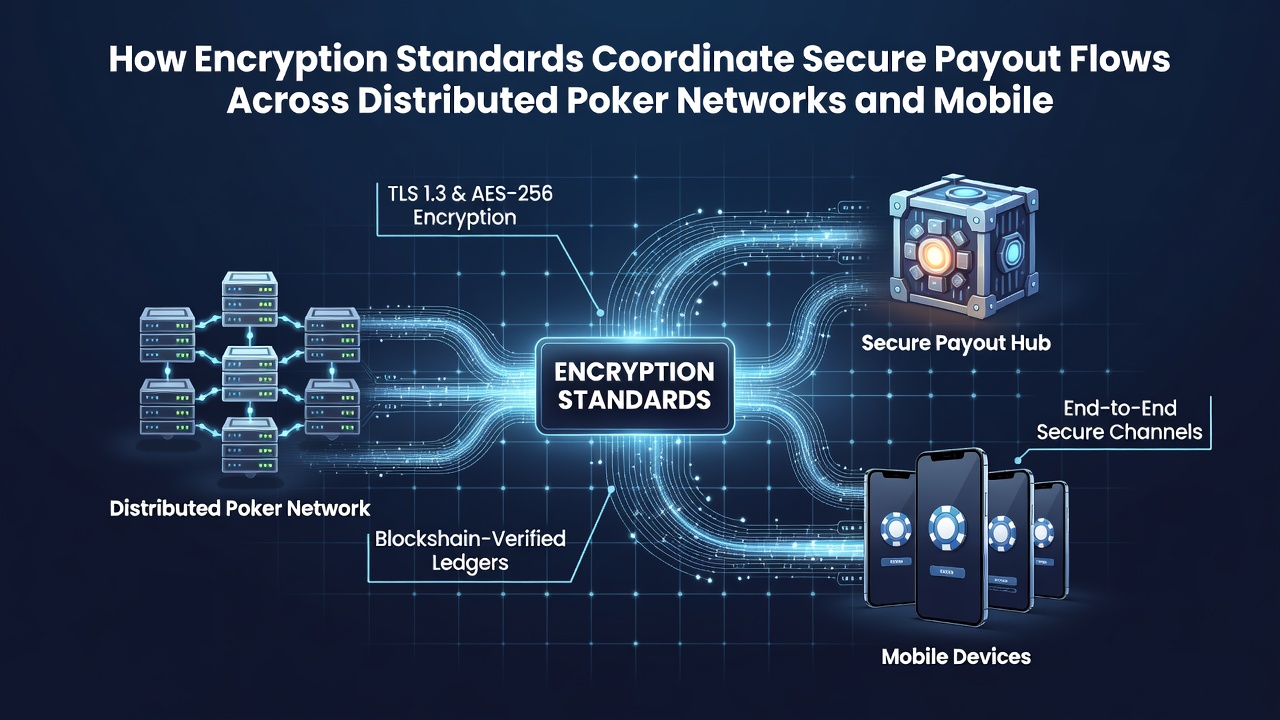
Encryption standards form the backbone of payout coordination in distributed poker networks and mobile casino platforms, where multiple servers and devices exchange financial data in real time. Standards such as TLS 1.3 and AES-256 work together to protect transaction details from interception while enabling seamless fund transfers between operators, payment processors, and players across jurisdictions.
Distributed poker networks rely on synchronized key exchange mechanisms that allow independent operators to verify player balances without exposing sensitive account information. When a player requests a withdrawal, the system initiates a multi-step process that begins with identity confirmation through encrypted tokens, proceeds to balance reconciliation across nodes, and concludes with authorized disbursement through secured payment rails.
Core Encryption Protocols in Action
Modern implementations combine asymmetric and symmetric encryption to balance speed with security. Public-key cryptography handles initial authentication and session setup, while symmetric algorithms like AES manage bulk data transfer during payout authorization. Researchers at the National Institute of Standards and Technology have documented how these layered approaches reduce latency in high-volume transaction environments without compromising integrity checks.
Key management systems distribute cryptographic material across geographically separated servers, ensuring that no single point holds complete decryption capability. This architecture supports poker networks that span multiple countries, where each jurisdiction may impose distinct data residency requirements. Mobile casino platforms extend the same framework through hardware-backed keystores on devices, which store session keys in secure enclaves isolated from the main operating system.
Coordinating Payout Flows in Practice
A typical payout sequence in these environments starts when a player submits a withdrawal request through a mobile app or desktop client. The request travels over an encrypted channel to the nearest network node, which validates the digital signature attached to the transaction. Subsequent nodes then cross-reference the request against shared ledgers protected by hash chains, confirming that funds have not already been claimed elsewhere in the distributed system.
Once verification completes, the network triggers an encrypted instruction to the designated payment processor. This instruction includes tokenized account details rather than raw banking information, which limits exposure if any single transmission is intercepted. Data from industry reports shows that such tokenization has become standard practice among operators handling cross-border payouts, particularly in regions with strict financial privacy regulations.
July 2026 brought incremental updates to several encryption suites used by major platforms, including refinements to elliptic curve parameters that improve resistance against emerging computational threats. These changes required coordinated rollouts across network participants, with testing phases that simulated simultaneous payout requests from thousands of concurrent users. Observers note that successful implementation depended on backward-compatible protocols that allowed older client versions to maintain connectivity during the transition period.
Security Measures Across Mobile and Network Layers
Mobile casino applications incorporate additional safeguards such as certificate pinning and runtime application self-protection, which detect attempts to tamper with encryption libraries. These measures complement the network-level protections, creating overlapping defense layers that address both external attacks and internal misconfigurations. Poker networks apply similar principles through mutual TLS authentication between nodes, requiring each server to present valid certificates before exchanging payout instructions.
Compliance frameworks further shape encryption deployment. Standards bodies in North America and the European Union publish guidelines that operators must follow when processing player funds, and these documents specify minimum key lengths and cipher suites for financial data. Australian regulatory sources have also issued technical requirements that align with international benchmarks while addressing local data sovereignty concerns.
Payment orchestration services act as intermediaries that translate between different encryption formats used by various financial institutions. When a poker network routes a payout to a processor that supports only certain legacy protocols, the orchestration layer performs on-the-fly re-encryption while maintaining an auditable log of each transformation. This capability proves essential for networks serving players across diverse banking ecosystems.
Conclusion
Encryption standards continue to evolve alongside the technical demands of distributed poker networks and mobile casino platforms. Coordinated implementation of these standards enables secure, efficient payout flows that span multiple operators, devices, and regulatory environments. As transaction volumes grow and threat landscapes shift, the underlying cryptographic infrastructure adapts through incremental protocol updates and enhanced key management practices.