Exploring How Background Soundtracks Shape Decision Timing in Digital Card Game Environments

Digital card game platforms continue to refine their audio layers as developers track how background soundtracks influence the pace at which players reach decisions during matches, and data collected across multiple titles reveals consistent patterns in response intervals when music tempo and layering shift. Researchers at several institutions have measured these effects by logging click timestamps and turn durations while players engage with standard decks under controlled audio conditions, and results show that slower ambient tracks often extend the average decision window by fractions of a second per turn.
Audio Design Elements and Their Measurable Impact
Game studios adjust instrumentation, rhythm, and dynamic range to align with core mechanics, yet studies indicate that these choices also alter the cognitive load players experience when evaluating card options, and this alteration becomes visible in aggregated timing logs. When a soundtrack maintains a steady mid-tempo beat around 90 beats per minute, participants in controlled tests tend to complete their selections more uniformly across rounds, whereas tracks that build in intensity near the end of a timer prompt quicker clicks without necessarily improving accuracy. Observers note that the layering of subtle percussion under melodic lines creates a rhythmic anchor that players unconsciously synchronize with, and this synchronization shows up as reduced variance in decision speed across sessions lasting longer than twenty minutes.
Tempo Variations Across Popular Titles
Digital adaptations of collectible card games released in recent years have incorporated adaptive sound systems that respond to remaining time or board complexity, and telemetry from these systems demonstrates how tempo ramps correlate with shifts in average turn length. One dataset compiled from matches played on platforms supporting both mobile and desktop clients found that tracks accelerating from 80 to 120 beats per minute shortened median decision time by roughly 0.8 seconds per action when players faced multiple valid plays. In contrast, static low-tempo scores maintained steadier pacing even as match complexity increased, suggesting that constant musical cues help stabilize processing speed rather than accelerate it.
Research Findings from Controlled Experiments
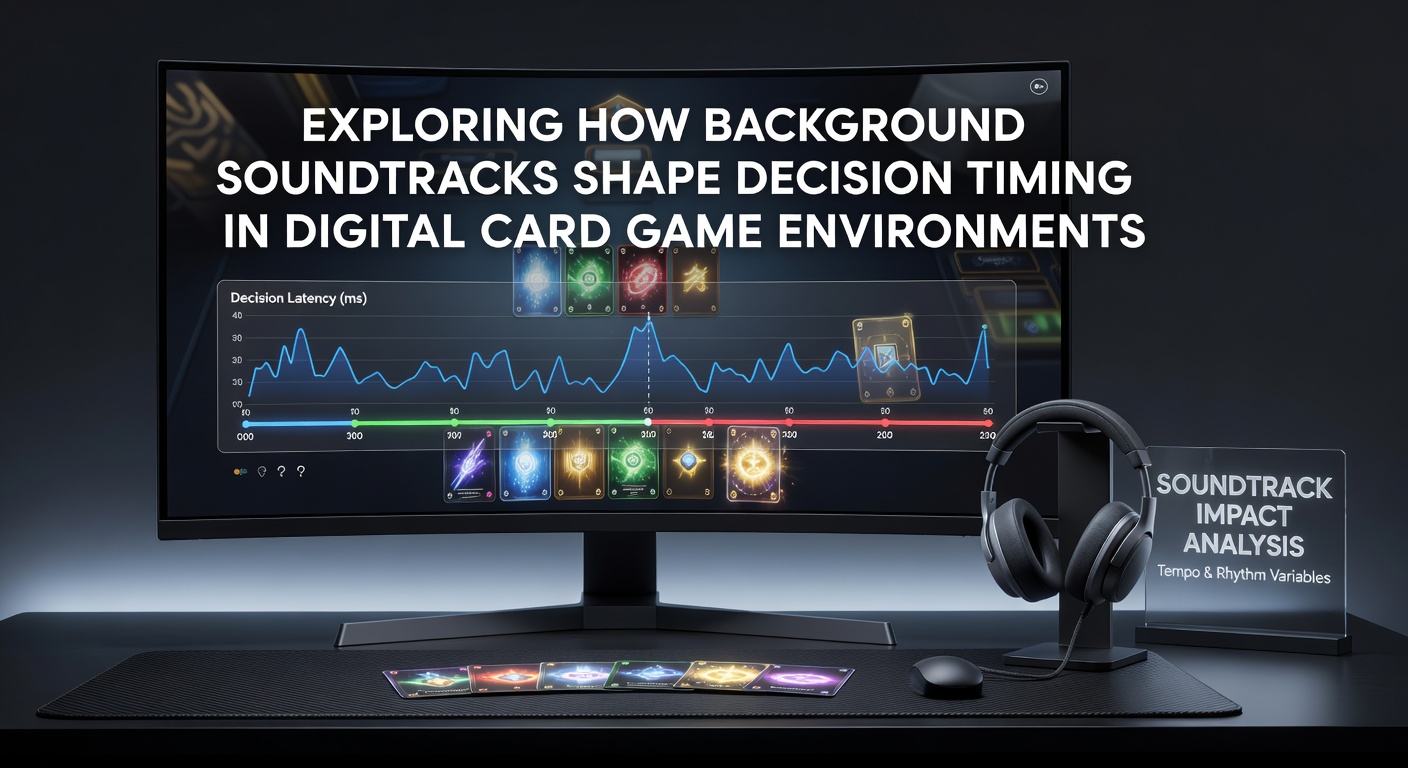
Academic teams have isolated soundtrack variables while holding visual and mechanical elements constant, and their protocols typically involve randomized playlists assigned to participant groups who compete in identical scenarios. Data from these trials reveal that silence or minimal audio produces the widest spread in decision timing, while carefully composed background layers compress that spread. A project conducted at an Australian research center released preliminary figures in May 2026 showing that participants exposed to genre-matched ambient scores completed complex multi-card combinations with 12 percent less deviation in timing compared with those using default system sounds. The same report highlighted that volume levels above 65 decibels began to reverse the stabilizing effect, pushing some players toward faster yet less considered selections.
What's interesting is how these patterns hold across different player experience levels, and longitudinal tracking indicates that experienced competitors adapt their timing to soundtrack changes more rapidly than newcomers. Newer players show greater sensitivity to sudden dynamic swells, often pausing longer when low-frequency drones intensify, whereas veterans maintain consistent intervals regardless of audio shifts. Such differences appear in session logs that separate cohorts by total hours played, and the separation remains statistically significant even after controlling for deck familiarity.
Regional Data and Platform Comparisons
Analyses drawn from North American and European server clusters indicate modest but repeatable differences in how soundtrack presence affects decision windows, and these differences align with average connection latency and interface scale. Desktop clients with larger displays tend to show smaller timing shifts when background music changes, while mobile sessions exhibit more pronounced compression of decision intervals under the same audio conditions. Regulatory bodies such as the Australian Communications and Media Authority have referenced similar telemetry in broader digital entertainment reports, noting that audio configuration forms part of accessibility considerations for timed interactive content.
Industry organizations tracking user retention have begun including audio preference surveys alongside performance metrics, and early cross-title comparisons suggest that players who disable soundtracks entirely display wider timing distributions than those who retain default mixes. This pattern appears whether the game uses orchestral arrangements or electronic minimalism, pointing to the presence of any structured auditory layer rather than specific stylistic choices as the primary factor.
Design Adjustments Informed by Timing Data
Developers increasingly reference decision-timing heatmaps when iterating on soundtrack parameters, and several studios now test multiple mixes during closed beta phases to identify versions that produce desired pacing without altering win rates. One documented case involved a mid-cycle update that replaced an accelerating percussion loop with a steadier synth pad, after which aggregate turn durations lengthened by 1.2 seconds on average across ranked queues. The adjustment coincided with improved retention metrics in the weeks following deployment, though causation remains under further review by the studio's analytics group.
Those who study player behavior observe that soundtrack influence extends beyond single turns into overall match flow, and extended sessions reveal cumulative effects where consistent audio pacing helps prevent decision fatigue in later rounds. Adaptive systems that lower volume or simplify instrumentation during high-complexity moments have shown particular promise in maintaining stable timing throughout matches exceeding thirty minutes.
Conclusion
Evidence gathered from platform telemetry, controlled experiments, and regional comparisons continues to map the relationship between background soundtracks and decision timing in digital card environments, and this mapping informs incremental refinements in audio implementation. As measurement techniques grow more granular, developers gain clearer guidance on how tempo, layering, and dynamic range interact with player processing speed. The patterns identified so far emphasize that audio design functions as both an aesthetic and a functional component, shaping the temporal structure of play without requiring changes to core rules or visuals.